Image 1 of 1
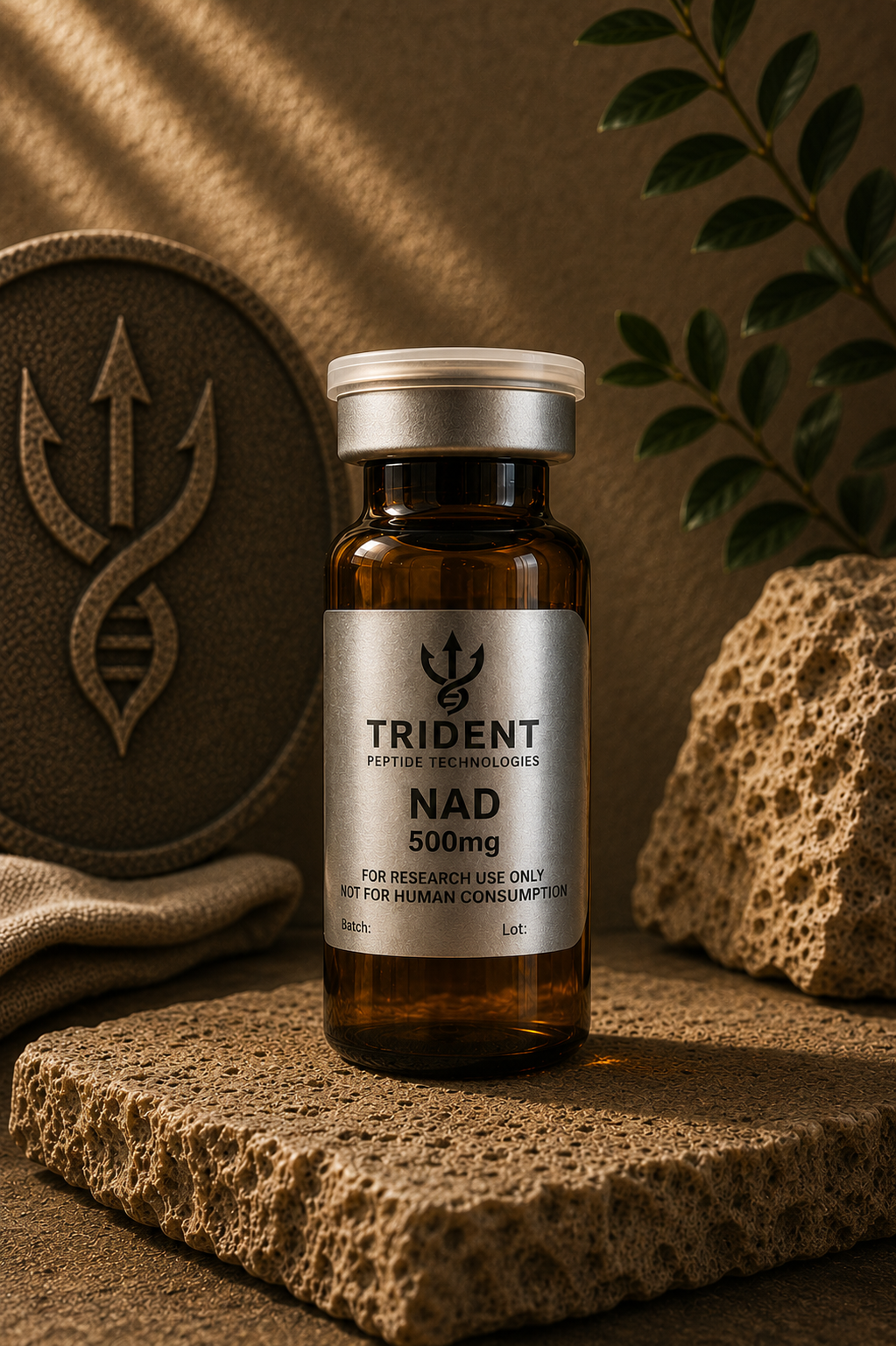
NAD+ 500mg
NAD (nicotinamide adenine dinucleotide) is a vital coenzyme found in every cell. It plays a central role in metabolism, energy production, DNA repair, and cell signaling. Interest in NAD supplementation and therapies (like intravenous NAD, NAD precursors such as nicotinamide riboside [NR] and nicotinamide mononucleotide [NMN]) stems from its potential to support cellular health, aging resilience, and cognitive and metabolic function. Below are key benefits supported by current research and clinical observations.
Primary benefits
Cellular energy production
NAD is essential for mitochondrial function and ATP generation through oxidative phosphorylation.
Increased NAD levels can improve cellular energy metabolism, which may reduce fatigue and support physical performance.
DNA repair and genomic stability
NAD is a required substrate for PARP enzymes that repair DNA damage.
Adequate NAD supports more efficient repair of DNA breaks and maintenance of genomic integrity, important for healthy aging.
Activation of sirtuins (longevity-associated enzymes)
Sirtuins (SIRT1–SIRT7) depend on NAD to deacetylate proteins involved in metabolism, stress resistance, and mitochondrial function.
Boosting NAD can enhance sirtuin activity, which is linked to improved metabolic health and stress resilience in preclinical studies.
Metabolic health and insulin sensitivity
NAD augmentation has been associated with improved glucose tolerance, lipid metabolism, and insulin sensitivity in animal models and some human trials.
This may support weight management and reduce metabolic disease risk factors.
Cognitive function and neuroprotection
NAD supports neuronal energy metabolism and may protect against neurodegeneration by enhancing mitochondrial function and reducing oxidative stress.
Some studies suggest benefits for cognitive performance, brain fog, and recovery from substance withdrawal, though results vary and more research is needed.
Cellular stress resistance and inflammation modulation
NAD-regulated pathways help cells respond to oxidative stress and modulate inflammatory signaling.
Higher NAD availability can reduce markers of inflammation in preclinical models and some human studies.
Circadian rhythm and sleep regulation
NAD influences enzymes and pathways tied to the circadian clock (for example, sirtuins and clock genes).
Optimizing NAD may help align metabolic and sleep rhythms, potentially improving sleep quality and daytime energy.
Applications and contexts where NAD is used
Anti-aging and longevity strategies: NAD precursors (NR, NMN) and lifestyle approaches to preserve NAD levels (exercise, calorie management, sleep) are commonly used in longevity programs.
Athletic performance and recovery: Athletes may use NAD-supporting supplements to boost mitochondrial capacity and recovery.
Cognitive support and addiction recovery: Intravenous NAD therapy has been used in some clinics for acute support during withdrawal and for cognitive fatigue, though evidence is mixed.
Metabolic and mitochondrial disorders: NAD-targeted therapies are being researched as adjuncts for metabolic and mitochondrial dysfunction.
Safety, considerations, and limitations
Evidence mix: Strong mechanistic and preclinical evidence supports many NAD benefits, but human clinical data are still emerging. Some benefits are supported by small trials; larger, long-term RCTs are limited.
Forms and dosing: Common approaches include oral NR and NMN, nicotinamide (vitamin B3) derivatives, and intravenous NAD. Bioavailability, dosing regimens, and cost differ across forms.
Side effects: Oral precursors are generally well tolerated; possible mild side effects include nausea, flushing (with some B3 forms), or gastrointestinal upset. IV NAD can cause transient symptoms (fatigue, flushing, nausea, lightheadedness) and should be administered by qualified clinicians.
Interactions and medical conditions: People with certain health conditions or taking specific medications should consult a healthcare provider before starting NAD therapies. Pregnant or breastfeeding individuals should avoid unproven interventions.
Not a cure-all: NAD support can be a powerful tool within a broader approach (diet, exercise, sleep, stress management). It’s not a substitute for foundational lifestyle practices.
Practical recommendations
Prioritize lifestyle strategies that preserve NAD: regular exercise, adequate sleep, time-restricted eating/intermittent fasting (when appropriate), and avoiding excessive alcohol.
Summary NAD is central to energy production, DNA repair, sirtuin activation, and cellular resilience. Supporting NAD—through lifestyle measures, oral precursors (NR, NMN), or clinical therapies—may improve energy
NAD (nicotinamide adenine dinucleotide) is a vital coenzyme found in every cell. It plays a central role in metabolism, energy production, DNA repair, and cell signaling. Interest in NAD supplementation and therapies (like intravenous NAD, NAD precursors such as nicotinamide riboside [NR] and nicotinamide mononucleotide [NMN]) stems from its potential to support cellular health, aging resilience, and cognitive and metabolic function. Below are key benefits supported by current research and clinical observations.
Primary benefits
Cellular energy production
NAD is essential for mitochondrial function and ATP generation through oxidative phosphorylation.
Increased NAD levels can improve cellular energy metabolism, which may reduce fatigue and support physical performance.
DNA repair and genomic stability
NAD is a required substrate for PARP enzymes that repair DNA damage.
Adequate NAD supports more efficient repair of DNA breaks and maintenance of genomic integrity, important for healthy aging.
Activation of sirtuins (longevity-associated enzymes)
Sirtuins (SIRT1–SIRT7) depend on NAD to deacetylate proteins involved in metabolism, stress resistance, and mitochondrial function.
Boosting NAD can enhance sirtuin activity, which is linked to improved metabolic health and stress resilience in preclinical studies.
Metabolic health and insulin sensitivity
NAD augmentation has been associated with improved glucose tolerance, lipid metabolism, and insulin sensitivity in animal models and some human trials.
This may support weight management and reduce metabolic disease risk factors.
Cognitive function and neuroprotection
NAD supports neuronal energy metabolism and may protect against neurodegeneration by enhancing mitochondrial function and reducing oxidative stress.
Some studies suggest benefits for cognitive performance, brain fog, and recovery from substance withdrawal, though results vary and more research is needed.
Cellular stress resistance and inflammation modulation
NAD-regulated pathways help cells respond to oxidative stress and modulate inflammatory signaling.
Higher NAD availability can reduce markers of inflammation in preclinical models and some human studies.
Circadian rhythm and sleep regulation
NAD influences enzymes and pathways tied to the circadian clock (for example, sirtuins and clock genes).
Optimizing NAD may help align metabolic and sleep rhythms, potentially improving sleep quality and daytime energy.
Applications and contexts where NAD is used
Anti-aging and longevity strategies: NAD precursors (NR, NMN) and lifestyle approaches to preserve NAD levels (exercise, calorie management, sleep) are commonly used in longevity programs.
Athletic performance and recovery: Athletes may use NAD-supporting supplements to boost mitochondrial capacity and recovery.
Cognitive support and addiction recovery: Intravenous NAD therapy has been used in some clinics for acute support during withdrawal and for cognitive fatigue, though evidence is mixed.
Metabolic and mitochondrial disorders: NAD-targeted therapies are being researched as adjuncts for metabolic and mitochondrial dysfunction.
Safety, considerations, and limitations
Evidence mix: Strong mechanistic and preclinical evidence supports many NAD benefits, but human clinical data are still emerging. Some benefits are supported by small trials; larger, long-term RCTs are limited.
Forms and dosing: Common approaches include oral NR and NMN, nicotinamide (vitamin B3) derivatives, and intravenous NAD. Bioavailability, dosing regimens, and cost differ across forms.
Side effects: Oral precursors are generally well tolerated; possible mild side effects include nausea, flushing (with some B3 forms), or gastrointestinal upset. IV NAD can cause transient symptoms (fatigue, flushing, nausea, lightheadedness) and should be administered by qualified clinicians.
Interactions and medical conditions: People with certain health conditions or taking specific medications should consult a healthcare provider before starting NAD therapies. Pregnant or breastfeeding individuals should avoid unproven interventions.
Not a cure-all: NAD support can be a powerful tool within a broader approach (diet, exercise, sleep, stress management). It’s not a substitute for foundational lifestyle practices.
Practical recommendations
Prioritize lifestyle strategies that preserve NAD: regular exercise, adequate sleep, time-restricted eating/intermittent fasting (when appropriate), and avoiding excessive alcohol.
Summary NAD is central to energy production, DNA repair, sirtuin activation, and cellular resilience. Supporting NAD—through lifestyle measures, oral precursors (NR, NMN), or clinical therapies—may improve energy