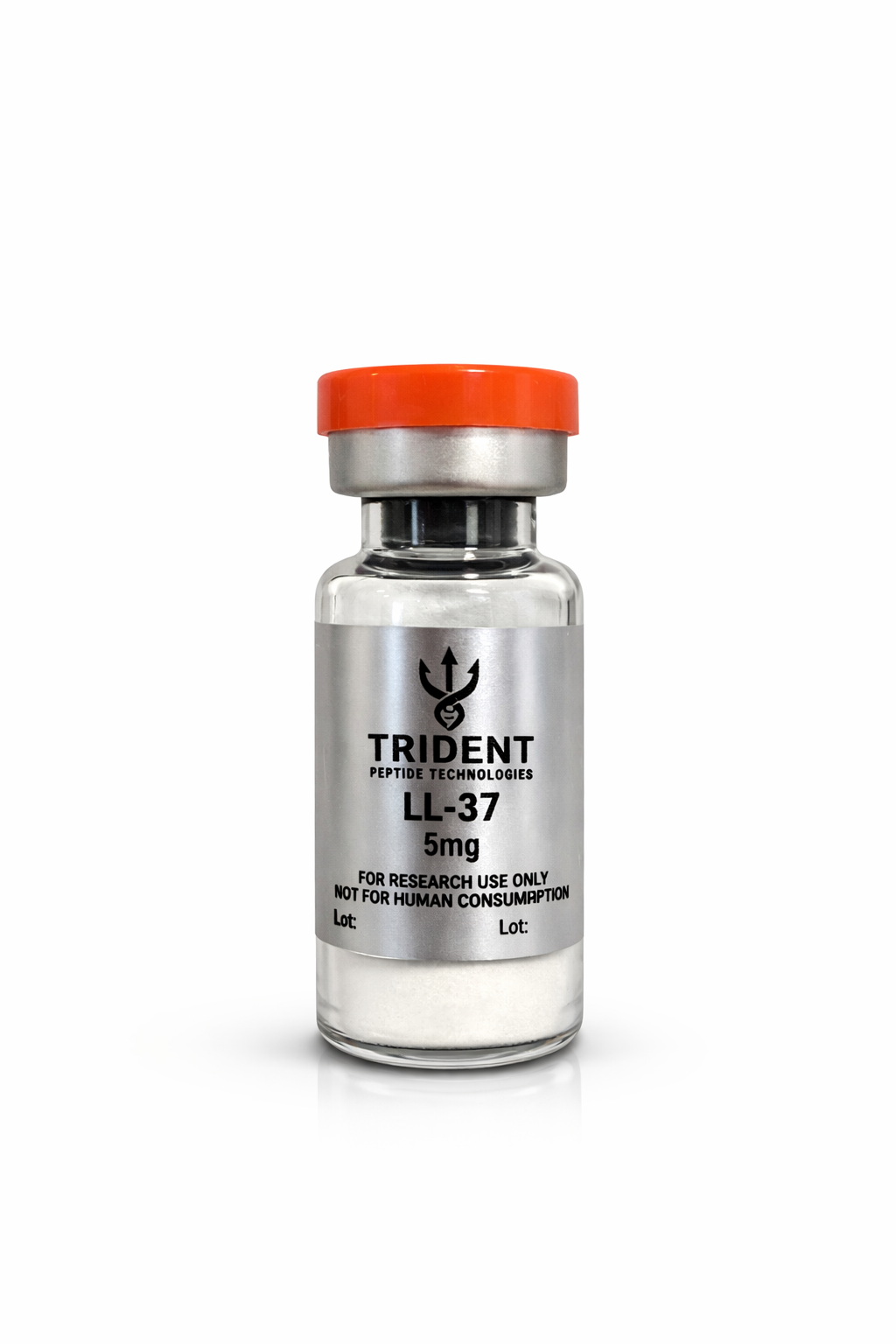
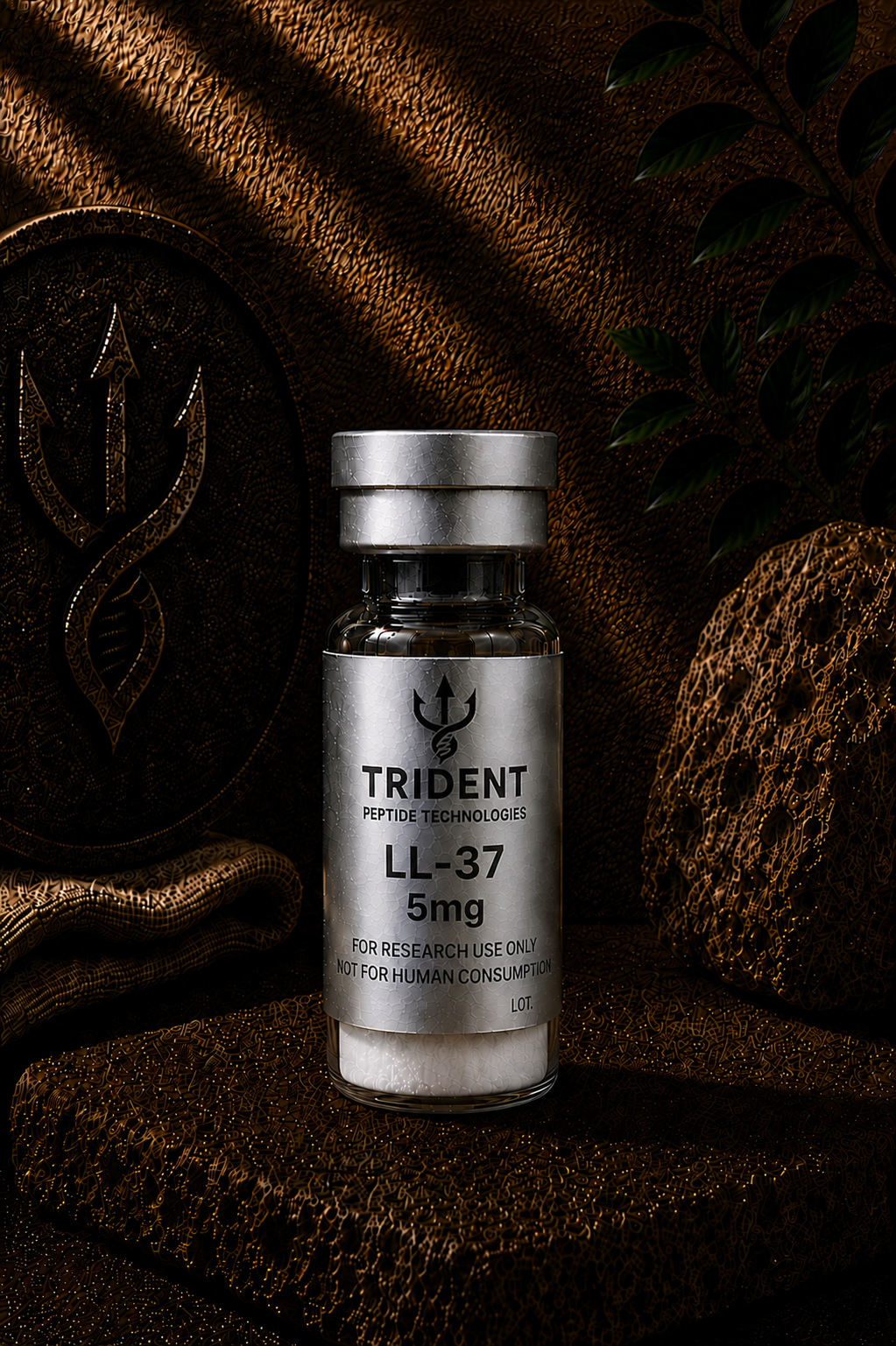
LL-37 5MG

$95.00

LL-37 is a naturally occurring human antimicrobial peptide that demonstrates potential therapeutic utility beyond its immediate role in innate immune defense. Preclinical and early clinical evidence indicates that LL-37 may:

  • Modulate inflammatory responses by down‑regulating excessive pro‑inflammatory signaling and promoting resolution pathways;

  • Promote wound healing and tissue repair through recruitment and activation of immune effector cells and progenitor/stem cells to sites of injury;

  • Enhance barrier function of epithelia and mucosa, thereby reducing susceptibility to secondary infection; and

  • Stimulate angiogenesis, which can facilitate revascularization and nutrient delivery to regenerate damaged tissue.

Potential clinical indications under investigation include chronic non‑healing wounds (including diabetic and venous ulcers), select dermatologic conditions characterized by impaired repair or dysregulated inflammation, and adjunctive use with antimicrobial therapies to improve outcomes and reduce pathogen burden.

Caveats and risk considerations (legal/medical context):

  • The foregoing statements constitute summary observations of evolving scientific data and do not constitute medical advice, an offer of treatment, or an assurance of clinical efficacy or safety.

  • LL-37’s biological effects are dose‑ and context‑dependent; therapeutic outcomes may vary with concentration, route of administration, formulation, and patient comorbidities.

  • Safety, tolerability, pharmacokinetics, and long‑term effects require controlled clinical evaluation. Adverse events, including potential pro‑inflammatory or cytotoxic effects at supraphysiologic doses, cannot be excluded without rigorous testing.

  • Any investigational use of LL-37 or LL‑37–derived products must comply with applicable regulatory requirements, institutional review board/ethics committee approval, and informed consent procedures. Use outside approved indications may carry legal and professional liability risks.

  • Statements about potential benefits are contingent upon ongoing research; until validated in adequately powered randomized controlled trials and regulatory review, claims of therapeutic efficacy should be qualified and limited in promotional or clinical communications.

Recommendation: Further development should proceed under appropriate preclinical safety studies and clinical trial protocols to define safe, effective dosing regimens, delivery systems, and patient selection criteria prior to routine clinical use.

LL-37 is a naturally occurring human antimicrobial peptide that demonstrates potential therapeutic utility beyond its immediate role in innate immune defense. Preclinical and early clinical evidence indicates that LL-37 may:

  • Modulate inflammatory responses by down‑regulating excessive pro‑inflammatory signaling and promoting resolution pathways;

  • Promote wound healing and tissue repair through recruitment and activation of immune effector cells and progenitor/stem cells to sites of injury;

  • Enhance barrier function of epithelia and mucosa, thereby reducing susceptibility to secondary infection; and

  • Stimulate angiogenesis, which can facilitate revascularization and nutrient delivery to regenerate damaged tissue.

Potential clinical indications under investigation include chronic non‑healing wounds (including diabetic and venous ulcers), select dermatologic conditions characterized by impaired repair or dysregulated inflammation, and adjunctive use with antimicrobial therapies to improve outcomes and reduce pathogen burden.

Caveats and risk considerations (legal/medical context):

  • The foregoing statements constitute summary observations of evolving scientific data and do not constitute medical advice, an offer of treatment, or an assurance of clinical efficacy or safety.

  • LL-37’s biological effects are dose‑ and context‑dependent; therapeutic outcomes may vary with concentration, route of administration, formulation, and patient comorbidities.

  • Safety, tolerability, pharmacokinetics, and long‑term effects require controlled clinical evaluation. Adverse events, including potential pro‑inflammatory or cytotoxic effects at supraphysiologic doses, cannot be excluded without rigorous testing.

  • Any investigational use of LL-37 or LL‑37–derived products must comply with applicable regulatory requirements, institutional review board/ethics committee approval, and informed consent procedures. Use outside approved indications may carry legal and professional liability risks.

  • Statements about potential benefits are contingent upon ongoing research; until validated in adequately powered randomized controlled trials and regulatory review, claims of therapeutic efficacy should be qualified and limited in promotional or clinical communications.

Recommendation: Further development should proceed under appropriate preclinical safety studies and clinical trial protocols to define safe, effective dosing regimens, delivery systems, and patient selection criteria prior to routine clinical use.